Robots have long symbolized the future. And in many ways, the robotics field is now at a meaningful turning point. As research into physical AI built on foundation models gains momentum, robots are learning to understand physical environments and translate that understanding into precise motion and behavior. With these advances, interest and expectations are growing rapidly.
Yet most people don’t feel like the era of robots has fully arrived. Compared to technologies like generative AI, robots still feel out of reach. We still don’t encounter them much—whether in industry or everyday life.
So how far has robot technology actually come? And what will it take for robots to move beyond research and into widespread, real-world use?
Moving beyond factories and closer to everyday life
Robots used to be built mainly for factories. They handled tasks suited to manufacturing environments—moving heavy loads at high speed or repeating predefined processes over and over.
More recently, robot technology has expanded beyond manufacturing into service robots: robots that move on their own and manipulate objects. Service robots built for specific roles—autonomous taxis, serving robots, household cleaning robots—have already matured significantly and are widely used.
NAVER’s robot-friendly headquarters, 1784, is a prime example. Each day, around 100 autonomous robots move through the building handling deliveries. It’s a working environment where humans and robots share the same space naturally. 1784 is more than a headquarters—it’s become a testbed and global reference for smart buildings that support large-scale robot operations.
Research is now moving into territory where robots interact directly with people and objects—picking things up and handing them off. This is the stage that brings a robot’s service full circle. But it involves factors that are hard to calculate in advance, like how much force to apply or how to detect contact. The core challenge is gathering diverse physical data, training AI on it, and turning that into real-world movement.
What it takes to bring service robots mainstream
(1) Multi-robot intelligence system: Managing robots at scale
What’s the most critical technology for deploying service robots in real-world settings? For robots to spread across industries, different types of robots need to move simultaneously and perform multiple tasks—first at the building level, and eventually at the city level. At that scale, individual robot performance matters, but so does the system that manages them all efficiently.
TEAM NAVER has learned this firsthand by operating around 100 robots each day at 1784. When large numbers of robots move through the same space, controlling them one by one has its limits. A centralized system that manages them collectively and assigns priorities is essential.
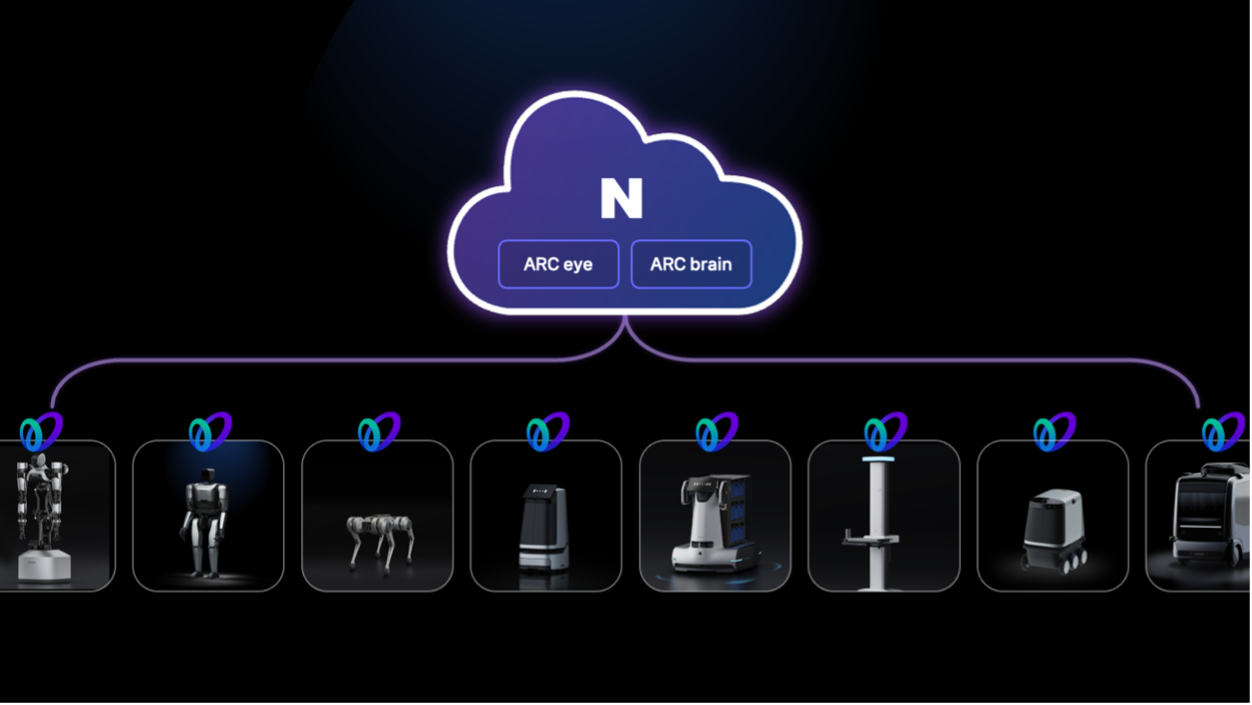
We call this a “multi-robot intelligence system” or “multi-robot orchestration system.” It coordinates the movements of countless robots while maximizing service efficiency by managing each robot’s tasks. The latest algorithms and map data required for services are also updated in real time.
This kind of centralized system runs on cloud infrastructure. By leveraging the cloud, computational tasks like planning, learning, and resource management can be handled centrally, reducing the burden on individual robots. The result is better energy and operational efficiency across the system. And since expensive sensors and computing resources don’t need to be installed on every robot, overall costs go down too. Looking ahead, we expect multi-robot intelligence systems to evolve into platform services that robots can share.
Why efficient robot operation systems matter
Autonomous taxi services offer a clear example of large-scale robot operation in action. Companies like Waymo and Tesla run autonomous taxi services on real roads, managing large fleets of vehicles and transporting passengers safely. Waymo, in particular, is rapidly expanding across several U.S. cities and extending service into other countries.
Behind this rapid expansion is more than just autonomous driving technology—it’s an integrated control system that manages the movement of every vehicle. This goes beyond individual vehicle intelligence. It’s about building a multi-robot intelligence system where thousands of vehicles are connected to a centralized system and collectively optimized to operate safely on real roads.
As more airports, hospitals, and large commercial spaces bring in robots that move around simultaneously, integrated control systems are becoming increasingly important. And as operations scale up to city-level environments, their role only grows.
ARC (AI-Robot-Cloud): The brain that connects all robots
TEAM NAVER began researching ways to centrally control various types of robots at scale using cloud-based intelligence early on. At the center of this effort is ARC, our multi-robot intelligence system. ARC connects not just large numbers of robots, but robots of different types, into a single system. At 1784, around 100 robots are linked to ARC and connected to the cloud in real time via 5G, performing tasks like delivering packages, lunches, and drinks.
Through ARC, robots receive real-time information they need to coexist with humans and understand spaces. Using digital twin data, ARC identifies each robot’s current location and continuously updates optimal routes to their destinations. By integrating with building infrastructure like robot ports and door controls, robots can move freely throughout the building. ARC also connects services, making it easy for employees to use robot services.
As a multi-robot intelligence system that unifies large numbers of robots under a single intelligence, ARC enables diverse robots to share data, learn together, and coexist naturally in everyday spaces. We’ve been verifying ARC’s efficiency and scalability in real-world environments, working toward a future where hundreds of thousands of robots move through cities, connecting people and spaces organically.
(2) Dedicated robot OS: Enabling diverse robot services
Operating large numbers of robots efficiently matters—but so does creating an environment where new robot services can be developed and adopted quickly. Service robots for serving, customer assistance, and logistics have grown rapidly in recent years, yet the ecosystem of services running on them is still in its early stages. If web- and AI-based services like payment, content delivery, or facial recognition could be applied to robots as easily as they are to smartphones, the range of robot services would expand much faster. But that kind of integration isn’t easy yet.
The challenge is that robot development and service development happen in different technical domains. Robot developers work with hardware, sensors, and autonomous driving, while web service developers often have little experience with robot platforms. This creates a high barrier, making it difficult to experiment quickly or drive broader adoption. A dedicated robot OS can help bridge this gap.
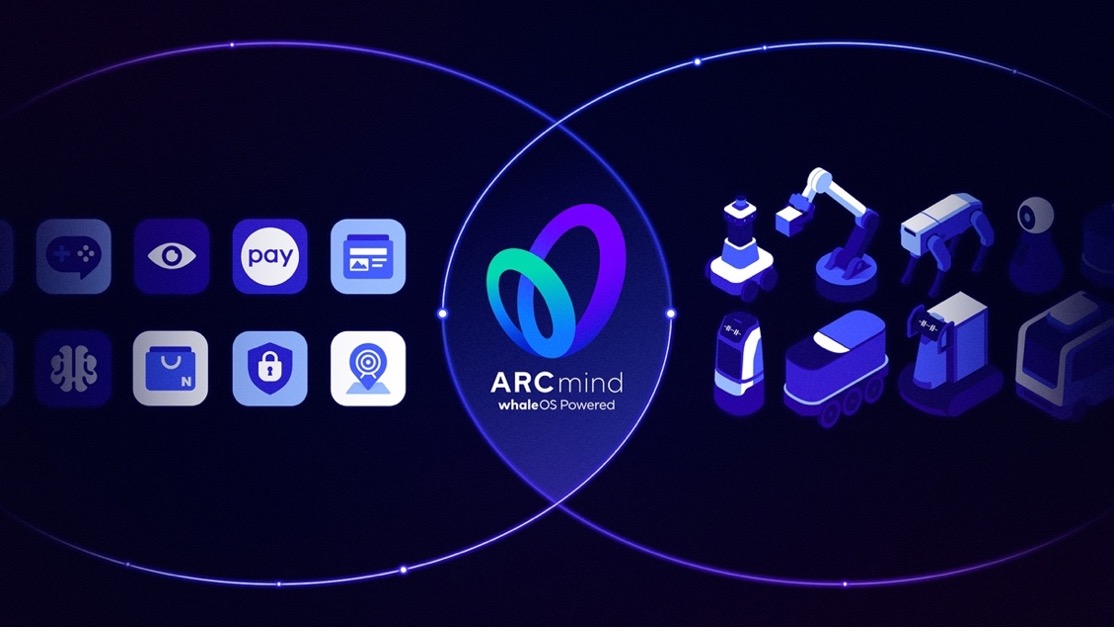
Until now, services were typically built separately for each robot. With a shared robot OS, a single service can work across different types of robots. This allows robots and services to combine more flexibly, enabling new kinds of services to emerge faster. Just as Android fueled the explosive growth of mobile apps, a well-designed robot OS could do the same for service robots.
ARC mind: World’s first web platform-based robot operating system
TEAM NAVER’s robot operating system, ARC mind, is designed to expand the robot service ecosystem. ARC mind is the world’s first web platform-based robot OS, enabling web developers to build robot services easily within a highly scalable platform environment.
Service developers don’t need deep knowledge of robot hardware. Through dedicated robot web APIs, they can implement a wide range of services—placing orders, processing payments, and more. This makes it easy to connect numerous service applications to various types of robots around the world. As a result, more developers can participate in building the robot ecosystem, naturally expanding what robot services can do.
NAVER’s vision: Becoming the platform for robots
We envision a future city where people and robots coexist, supported by advanced technologies. In this city, robots aren’t confined to specific spaces. Delivery robots travel along sidewalks, autonomous vehicles move through streets, and service robots go in and out of buildings—robots become a natural part of daily life.
To realize this future, a platform for robot operation matters as much as the robots themselves. In a city where numerous robots move simultaneously, each must acquire information independently, recognize its location, and communicate with others. Robots, too, will need a shared platform—their own “internet.”
We’re building that foundation by integrating control systems, a dedicated robot OS, digital twins, and cloud infrastructure into a single platform—enabling robots to operate reliably throughout the city. Robot services won’t be confined to specific spaces or devices; they can expand naturally across buildings, streets, and the entire city.
Learn more in KBS N Series, AI Topia, episode 8
You can see these concepts in action in the eighth episode of KBS N Series’ AI Topia, “Orchestrating robots: How multi-robot intelligence systems work.” Peck Jongyoon, Robotics & Autonomous Driving Leader at NAVER LABS, breaks down these ideas with clear examples and helpful context. It’s a great way to get a fuller picture of the topics covered in this post.